
What Is S.M.A.R.T. Housing?
We hear constantly from local business owners that affordable workforce housing is a major hurdle for employee retention.
S.M.A.R.T. Housing is a City of Austin program standing for Safe, Mixed-Income, Accessible, Reasonably Priced, and Transit-Oriented development that directly addresses this issue. Our team regularly directs clients to modern buildings that secretly contain income-restricted apartments to help bridge this gap.
The City of Austin Housing Department manages the initiative by offering developers valuable fee waivers in exchange for dedicating a portion of their projects to these affordable units. Finding Austin smart housing apartments gives residents a chance to live centrally, as these specific units maintain strict income caps while the rest of the building leases at standard rates.
How Mixed-Income Units Work
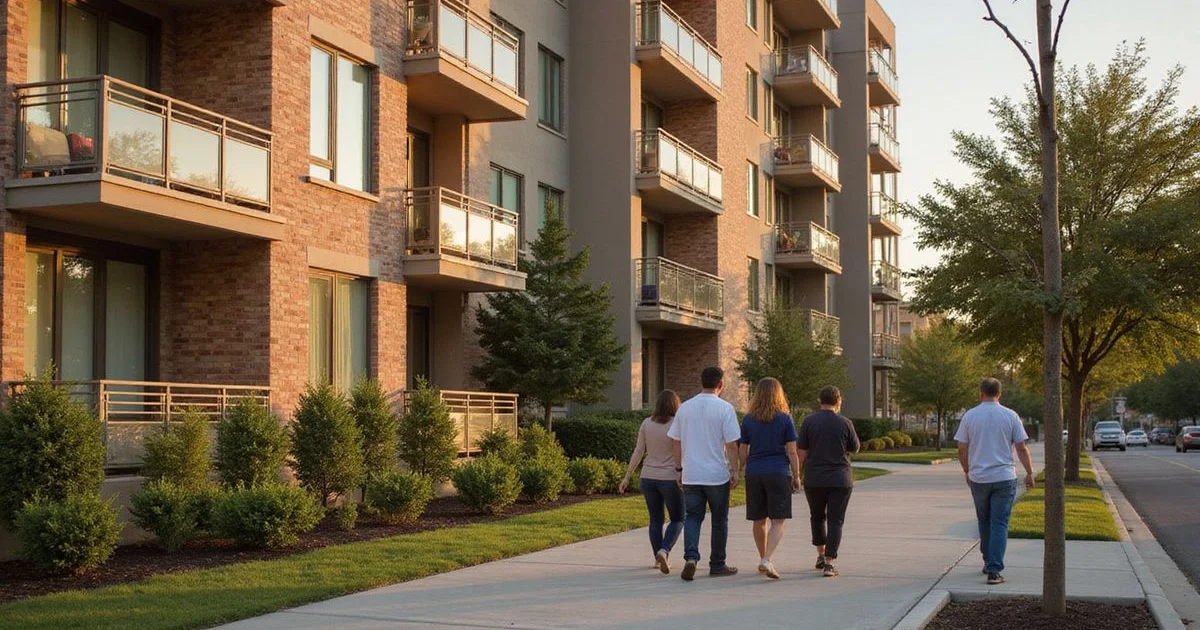
In a mixed-income development, affordable units are fully integrated with standard units. We love pointing out that you cannot tell the difference from the outside, as all residents share the exact same amenities.
| Feature | Restricted unit | Market-rate unit in the same building |
|---|---|---|
| Income limit | Yes, set by the program | No maximum |
| Rent | Capped by program rules | Set by the market |
| Screening | Property criteria apply | Property criteria apply |
| Availability | Limited number of units | Varies |
Income limits for these units are calculated as a percentage of the local Median Family Income, typically set at 60% or 80%. Our team monitors these figures closely, noting that the 2026 Median Family Income for a family of four in Austin reached $134,400. This means a single person earning up to $74,800 might qualify for an 80% limit unit at popular new properties like Paseo downtown.
Detailed breakdowns of how these percentages function can be found in our guide to AMI tiers.
Restricted doesn’t mean income-based
S.M.A.R.T. units feature capped rents, but the actual monthly rate is not calculated as a percentage of your personal paycheck. We often remind clients that many properties will still enforce a minimum-income rule to ensure you can cover the base amount.
Why These Units Can Be Hard to Find
Restricted units in mixed-income buildings are rarely advertised clearly on standard listing sites. We frequently see leasing offices omit them from online portals entirely, making it tough to spot them.
Several factors contribute to this limited visibility:
- Rapid Turnover: These units appear and disappear quickly as current leases expire.
- Permit Slowdowns: Austin saw a 97% drop in multifamily building permits in late 2025, which tightens new apartment supply significantly in 2026.
- Expiring Status: A property’s participation agreement can expire after a set period, such as a 5-year or 40-year term, removing units from the program entirely.
Because availability shifts so rapidly, property seekers constantly ask us for up-to-date research. We track down S.M.A.R.T. Housing units wherever possible and clearly note exactly what the property management must verify before you apply.
How to Identify and Confirm Eligibility

Getting accurate details requires speaking directly to the leasing office. Our experts recommend bypassing standard online forms and calling the property to ask very specific questions. Many Austin properties now use third-party income verification software like Snappt, so having official 2026 tax returns and recent pay stubs ready is crucial.
When you contact a building, always ask these six questions:
- Do you currently offer income-restricted units under S.M.A.R.T. Housing or a similar local initiative?
- Which floor plans fall under the restriction, and do you have any available for my desired 2026 move-in date?
- What specific SMART housing Austin income limits apply to my exact household size?
- What is the base rent for the unit, and which utilities will be my responsibility?
- Does your management company enforce a minimum-income requirement alongside the maximum limit?
- How does your office verify income, and will I need to recertify my earnings each year?
Always request these answers in writing via email. We know from experience that the property itself is the only entity that can give final confirmation on which units are restricted and what rules apply.
Austin Context: Commutes and Transit
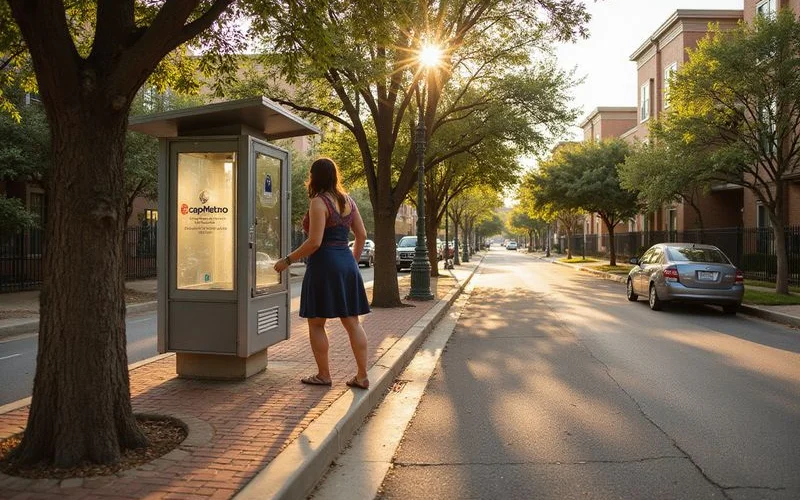
The “transit-oriented” aspect of the program ensures these developments sit close to major transportation hubs. Our team pays close attention to new 2026 CapMetro infrastructure upgrades that expand access for residents:
- Rapid 800 Pleasant Valley Line: Brings 10-minute peak frequency to the Eastside.
- Rapid 837 Expo Center Line: Connects the northeast corridor directly to major downtown employers.
If your daily routine relies on CapMetro transit, be sure to mention your primary routes during your apartment search. We frequently help renters expand their searches along the busy I-35 corridor, exploring suburbs like Round Rock, Pflugerville, Kyle, and San Marcos. Each of these satellite communities features its own distinct housing programs outside the Austin city limits.
For a broader look at the entire metro area, explore our detailed page covering affordable apartments in Austin.
Other Austin Programs
S.M.A.R.T. Housing is just one piece of the local affordability puzzle. Our researchers actively monitor several different pathways developers use to offer capped rents:
- Affordability Unlocked: A city initiative that waives development restrictions in exchange for units serving households at 60% of the median family income.
- Density Bonus Programs: Agreements that allow developers to build taller structures if they include a set number of affordable units.
- LIHTC Communities: Properties utilizing federal Low-Income Housing Tax Credits, which typically require strict annual income certifications.
Every single one of these programs carries its own unique application rules. We evaluate each property individually to ensure you meet the specific criteria. Providing the specific program name on your personalized list helps you understand exactly what to expect before applying.
Comparing S.M.A.R.T. Units With Other Austin Options
S.M.A.R.T. units represent an excellent opportunity, but they are just one path for budget-conscious locals. Our staff highly recommends comparing all available choices before making a final commitment to a specific neighborhood.
| Option | Income limit? | How rent is set | What to watch |
|---|---|---|---|
| S.M.A.R.T. unit in a mixed-income building | Yes | Capped under the development’s agreement | Limited number of units, restriction periods |
| Tax credit (LIHTC) community | Yes | Capped by program limits | Strict income certification, long waiting lists |
| Market-rate with lower minimum income | No | Market rent | Higher monthly rent, but easier screening |
| Suburban options along I-35 | Depends on property | Varies widely | Daily commute time and transit access |
A transit-friendly building in central Austin is often worth a longer wait, considering market-rate one-bedroom units downtown average around $2,450 in 2026. We find that other households prefer the immediate availability of a tax credit community in Pflugerville or a property with more relaxed criteria in Kyle. Requesting a multi-program search allows you to view these options side-by-side and make a confident, data-backed decision.
Mention Austin in Your Request
To begin your search for Austin smart housing apartments, simply select Austin as your primary city on our intake form. Our local agents ask that you explicitly mention this program in the additional considerations field.
Please include your exact household size, your total gross income before taxes, your desired budget, and your bedroom requirements. We will compile a customized list of available options and send it directly to your phone and email within 48 hours.
Final approval decisions and income verifications remain the sole responsibility of each individual apartment community. Send your details over today to kick off your property search.