

Why These Terms Get Mixed Up
Our clients frequently ask us to clarify housing subsidy rules. People use terms like “tax credit” and “Section 8” as if they mean the exact same thing. Search results and leasing offices blur them together constantly.
We see how this confusion leads to denied applications and wasted fees. This guide covers several distinct categories, including:
- Income-restricted apartments
- Tax credit communities
- Properties with lower minimum-income requirements
Not every property calculates rent based on your specific earnings. The U.S. Department of Housing and Urban Development (HUD) maintains strict definitions for each program. We created this resource to explain exactly how these terms function in the current market.
Understanding income based vs income restricted housing protects your budget.
The Four Terms in Plain Language
Income-based rent
Income-based rent means your payment is calculated directly from your household earnings using assistance program rules. The standard HUD rule caps your housing costs at 30 percent of your adjusted gross income. We always remind renters that this sliding scale offers immense financial protection.
If your hours get cut at work, your rent portion drops accordingly. The local Public Housing Authority, rather than the open market, determines your final monthly bill. We advise reporting any income loss to your caseworker immediately to adjust your rent.
Delaying this notification is a common mistake that leads to overpaying.
Income-restricted apartments
These communities designate specific units for renters who earn below a set limit. You must earn less than a specific percentage of the local Area Median Income (AMI) to qualify. We track these HUD income limits, which typically update every spring.
For instance, the new 2026 income limits took effect on May 1. The rent amount is usually capped based on the property’s assigned AMI tier, not your personal paycheck. Two households with entirely different salaries will pay the exact same rent for identical units.
We often point out that this fixed rent structure is the biggest difference when comparing income based vs tax credit apartments. Your monthly bill does not change if your earnings increase during the lease term.
Tax credit (LIHTC) apartments
The Low-Income Housing Tax Credit (LIHTC) program is the largest driver of affordable housing in the United States. This program has generated more than 3.5 million affordable units nationwide since its inception. We regularly work with properties overseen by state agencies, like the Texas Department of Housing and Community Affairs (TDHCA).
Tax credit apartments represent the most common type of income-restricted housing. The state enforces strict maximum rent calculations based on local median incomes.
We want to be clear that living in an LIHTC community does not mean you pay a percentage of your own salary. State guidelines require property managers to implement new rent limits within 45 days of their release.
You can learn more about how this specific subsidy functions in what is a tax credit apartment.
Lower minimum-income requirements
This category refers to a specific property screening rule rather than a government subsidy. Standard market-rate apartments typically require an applicant’s gross monthly income to equal 3 times the rent. We see many applicants get denied simply because they earn 2.5 times the rent.
Properties with lower minimum-income requirements drop this barrier, sometimes accepting incomes at just 2 or 2.5 times the monthly rate. These communities are not automatically subsidized and often charge full market rent.
We point buyers and renters toward these properties when their income falls just short of traditional approval formulas. The core difference is simply how much gross income the landlord demands to see on your pay stubs.
Side-by-Side Comparison
Reviewing a side-by-side comparison makes the local housing market much easier to understand. The U.S. operates over 2,100 local housing agencies, which creates massive variation in local rules. We use this matrix to help clients quickly eliminate options that do not fit their financial reality.
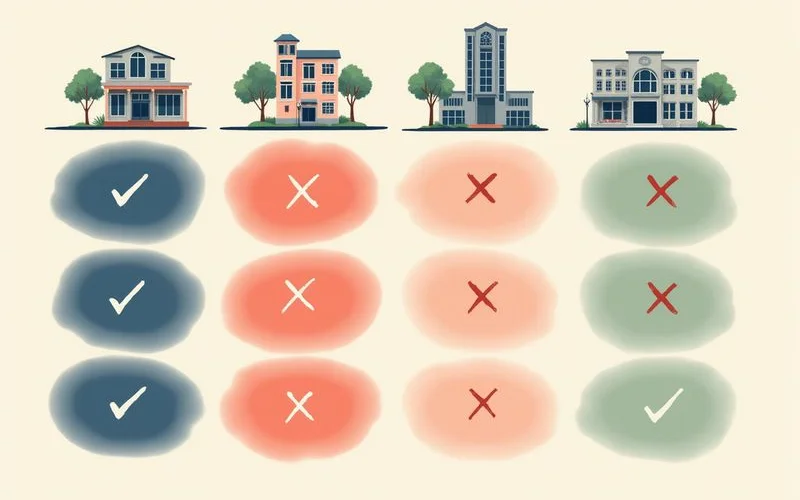
| Income-based rent | Income-restricted unit | Tax credit (LIHTC) unit | Lower minimum-income property | |
|---|---|---|---|---|
| What it is | Rent calculated from income under assistance rules | Unit with an income eligibility limit | Income-restricted unit in the LIHTC program | Property with lower income-to-rent screening |
| Rent based on your income? | Yes | Not necessarily | Usually not | No |
| Maximum income? | Yes, under program rules | Yes | Yes | No |
| Minimum income? | Usually not a barrier | Often, set by the property | Often, set by the property | Yes, but lower than typical |
| Voucher needed? | Depends on program | No | No | No |
| Who sets the rules? | Housing authority or program | Program agreement | LIHTC rules, TDHCA in Texas | The property |
| Paperwork | Program certification | Income certification | Income certification, often yearly | Standard application |
The one-line version
Income-based sets your rent from your income. Income-restricted sets who can rent. Tax credit is a common kind of income-restricted housing. Lower minimum-income is a screening rule, not a subsidy.
Where Section 8 Fits
The term “Section 8” usually refers to the federal Housing Choice Voucher program. HUD funds this massive initiative, which currently serves roughly 2.3 million American households. We frequently explain that a voucher is a portable form of rental assistance issued by a local Public Housing Authority.
With a voucher in hand, your rent share is tied to your income, and the government pays the remaining balance. Demand far outpaces supply, pushing the national average waiting list time to roughly 2.5 years. We see major metropolitan waitlists stretching up to 8 years.
You can apply a voucher at many property types, including LIHTC communities. This flexibility is the core difference when looking at section 8 vs income restricted housing. We emphasize that a tax credit apartment is a physical building, while Section 8 is a portable payment method.
Why It Matters for Your Budget
Imagine two renters looking at the exact same tax credit two-bedroom apartment. One applicant earns much less than the other, though both fall under the local 60% AMI income limit. We warn clients that without a voucher, both renters will typically pay the exact same flat rent.
For the lower-income renter, that fixed payment could create a severe housing cost burden. HUD defines a cost-burdened household as one spending more than 30 percent of its gross income on housing expenses. We see fixed rents rule out many lower-income applicants because they fail the property’s screening.
Understanding these program categories prevents you from making costly application mistakes. Knowing your specific needs dictates your best path forward:
- Renters needing sliding-scale payments must secure a voucher.
- Steady earners seeking predictable caps thrive in income-restricted units.
- Applicants with solid cash flow but lower gross multipliers fit lower minimum-income properties.
We always encourage verifying these specific requirements before paying any non-refundable application fees.

How to Tell Which Type a Property Is
Identifying a property’s exact housing program requires asking direct, specific questions. Leasing agents sometimes provide vague answers, so confirming the specific federal or state program is critical. We recommend searching the HUD National LIHTC Database or the TDHCA property inventory before calling.
When you call the leasing office, ask these specific questions:
- Is this unit income-restricted, and under which specific program (such as Section 42)?
- Is the rent fixed for the unit, or calculated from my actual household income?
- Is there a maximum AMI income limit for my household size?
- Is there a minimum income requirement, and what is the exact multiplier?
- Do you actively accept and process Housing Choice Vouchers?
Three Example Situations
These three scenarios use realistic 2026 financial details to demonstrate which housing type fits best. Reviewing these examples helps clarify exactly how different programs impact daily life. We use these profiles to train our own property specialists on matching clients with the right buildings.
- A retiree on a fixed income: Social Security provides her only income at $1,200 per month. A tax credit unit charging a fixed $900 rent easily violates standard minimum-income screening rules. We strongly suggest applying for a local voucher so her rent drops to roughly $360 per month. Age-restricted senior communities with HUD subsidies are also excellent targets.
- A family with two working parents: This household of four earns a steady combined income of $55,150 per year. Their earnings fall perfectly under the 2026 HUD 80 percent AMI limit for many regions. We point families in this bracket toward tax credit communities for a stable, capped monthly rent. The property requires annual income recertification to maintain the lease.
- A young worker starting a new job: Her new salary covers her bills comfortably, but she only earns 2.6 times the local market rent. This $60,000 salary places her well above the limits for most subsidized apartments. We advise this applicant to focus entirely on properties with lower minimum-income requirements. This approach bypasses the strict 3x gross multiplier.
Every unique financial situation points to a completely different housing solution. The community list you receive clearly labels each property type. We format our lists this way so you instantly see which buildings match your specific circumstances.
How We Label Your List
Every community on your provided list features a clear label identifying its exact subsidy type. You will know instantly if a building operates as a tax credit community or a standard income-restricted property. We document exactly what data our team verified and what details require direct confirmation.
Property managers update their unit availability and compliance criteria daily. Paying a $50 to $100 application fee for an apartment you cannot qualify for is extremely frustrating. We provide these detailed labels to protect your time and money during the search process.
Choosing What to Request
You do not have to master all these program definitions by yourself. Leaving all three apartment types selected on your request form is completely fine.
We will research local options that align with your specific household size and budget. The final report outlines exactly why each property made it onto your list, covering:
- Current 2026 rent limits and caps.
- Specific minimum-income screening rules.
- Accepted voucher programs.
Comparing income based vs income restricted housing is much simpler when looking at real options. We help you narrow down the field before you spend any money on applications.
Each individual community makes its own final approval decisions based on verified eligibility.
Reach out to our leasing specialists today to start your personalized housing search.